
Explore the Ancient Mystery: Stonehenge in England, an Icon of History and Culture
Explore the ancient mystery: Stonehenge in England, an icon of history and culture
- Learn English fast and easy
- Your first course for free
- Start now
A quick introduction for the curious reader: If you have ever wondered why a circle of enormous stones on the Salisbury Plain captures the imagination of millions, this text is for you. Below you will find a broad, structured, and engaging investigation that combines history, archaeology, astronomy, and culture to understand Stonehenge from multiple angles. Stay tuned: at the end there are practical recommendations for visiting and a real example of a person who changed their way of seeing this monument.
A first glance: what is Stonehenge?
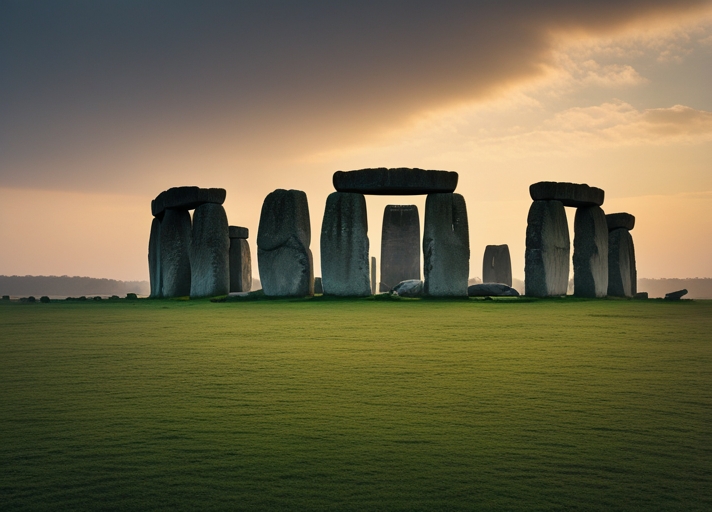
Stonehenge is a megalithic monument located on the Salisbury Plain in England. Built in different phases between the Neolithic and the Bronze Age (approx. 3000–2000 BC), the complex is formed by enormous vertical pietas and horizontal lintels arranged in a circle with adjacent structures. More than a simple stone structure, Stonehenge is a testament to the organizational, technological, and symbolic capability of prehistoric communities.
Origin, phases and construction: what science has been able to confirm
To understand its magnitude, it is useful to break down its construction into phases recognized by archaeology:
- Phase I (c. 3000 BC): a large circular ditch and an outer bank were built; this stage demonstrates territorial planning.
- Phase II (c. 2900–2600 BC): pits with human remains and offerings were placed; the site acquired a funerary and ritual dimension.
- Phase III (c. 2600–1600 BC): the enormous sarsen stones and the so-called bluestones were erected, transported from considerable distances.
The logistics: carrying blocks of several tons without modern machinery involves considerable social and technical engineering: labor organization, knowledge of traction, and probably ritualized procedures legitimizing collective effort.
Materials and transport
The sarsens are large local sandstones. The bluestones come from the Preseli Mountains in Wales, over 200 km away. Theories about their transport include:
- Transport in stages on rollers and ropes: the classic hypothesis combining human strength and simple techniques.
- Use of rafts and waterways: the combination of sea and river to bring blocks closer to the plain.
- Cultural translation or exchange: possibility that some pieces were gifts or symbols exchanged between communities.
Each hypothesis adds nuances about the social organization needed to build Stonehenge and about the prehistoric network of relations in the British Isles.
Proposed functions: temple, calendar, or something else?
The debate about Stonehenge’s function has been long and multidisciplinary. The main interpretations include:
- Astronomical observatory: alignments with solstices and equinoxes suggest use for marking agricultural cycles.
- Funerary and ceremonial site: human remains in pits and associations with ancestor rituals.
- Pilgrimage center: possible meeting place of communities for exchanges and celebrations.
- Territory and status marker: visible symbol of power and knowledge.
The most sensible, according to current evidence, is to think of Stonehenge as a combination of these functions: a multifaceted place serving as a social calendar, a select necropolis, and an identity symbol.
Astronomical alignments
One of the keys to understanding its everyday use is the relation to the solar movement. The main orientation marks the sunrise of the summer solstice and the sunset of the winter solstice, which provides:
- A cyclical reference for agriculture and ritual life.
- A visual spectacle that would have reinforced the authority of those coordinating the ceremonies.
These properties do not exclude other functions; rather, they complement them: astronomical knowledge blends with religious and social practices.
Recent archaeology: findings that change the narrative
Research with ground-penetrating radar, careful excavations, and radiocarbon dating have expanded our understanding. Among recent findings:
- Processional routes: material remains suggesting ceremonial paths to the monument.
- Ditches and adjacent structures: the area is not just the stone circle but a broader ritual landscape.
- Connections with nearby sites: the relation with Durrington Walls and other enclosures reveals a wider cultural network.
These discoveries transform the idea of Stonehenge as an isolated object: it is the visible point of a network of practices and meanings spanning centuries.
What human remains tell us
Isotopic and osteological analysis of associated remains sheds light on geographic origins, diets, and social status. Some key points:
- Some individuals seem to come from distant regions, confirming Stonehenge’s attraction as a meeting point.
- Offerings and funerary treatments vary, suggesting social hierarchies and differentiated rituals.
Myths, legends, and popular narrative
Stonehenge has also been a seedbed of myths: from attributions to wizards and kings to modern theories about extraterrestrials. Romantic literature and nationalist narratives have contributed to public fascination. Understanding these tales is essential to separate legend from evidence and to grasp how Stonehenge has been used as an identity resource.
Stories that persist
Some popular stories that still attract visitors:
- Stories about druids: although the modern association with druids is recent, it has been powerful for cultural imagery.
- Mystical and esoteric theories: alternative explanations that, even without evidence, influence the collective imagination.
Stonehenge and tourism: best practices for visitors
Visiting Stonehenge is an experience that can be transformative if done with respect and planning. Practical recommendations:
- Book in advance: access is controlled and tickets sell out during peak seasons.
- Guided tour: choosing authorized guides helps contextualize the visit and reduce misunderstandings.
- Timing and light: morning and sunset offer the best visual and photographic experience.
If you are also interested in improving your English practically and connected to cultural travel, you can explore online resources, for example a guide about comparative adjectives in English which will help you describe landscapes and sensations with greater precision during your visit.
Etiquette and conservation
Some unwritten rules that strengthen preservation:
- Stay on authorized paths and respect barriers.
- Do not remove or move objects from the site.
- Avoid rituals that could damage the physical environment.
These rules not only protect the stones but also help future generations experience the same wonder.
Cultural impact and legacy
Stonehenge has transcended its time: it appears in literature, music, and contemporary art. Its ability to persist in collective awareness responds to various factors:
- Powerful symbolism: geometric shapes and their location in the landscape evoke mystery and antiquity.
- National narrative: used at different times as a symbol of identity.
- Cultural tourism: its appeal mobilizes local and global economies.
Artistic interpretations
Contemporary artists have reinterpreted Stonehenge in multiple formats: from photography to installations that dialogue with the idea of ruin, permanence, and time. These works keep alive the debate about how the past connects with current sensibilities.
FAQs and debunked myths
Below I answer common questions based on scientific evidence:
- Were druids the builders? There is no direct evidence; their association is later.
- Are the bluestones of magical origin? No, their geological origin in Preseli is confirmed by rock analysis.
- Did it serve only as a calendar? No: its functions were multiple and changed over time.
Debunking myths does not diminish the site’s value; on the contrary, it expands admiration by revealing the real human capabilities behind its construction.
A personified example
To make this more tangible, imagine Maria, a 38-year-old history teacher who had never traveled outside her country. Maria organized a trip to England with the goal of seeing Stonehenge. Upon arrival, she experienced three key moments:
- Immediate astonishment: the view of the complex generated a feeling of smallness and connection with the past.
- Contextual understanding: the guide explained the construction phases and the relation to other enclosures, which transformed her perception from a simple monolith to a complex cultural landscape.
- Personal reflection: Maria returned with materials for her classroom and a methodology to explain to her students the complexity of the past without falling into fantastic tales.
Maria’s story shows how a well-mediated experience can turn tourism into meaningful learning.
How to read Stonehenge today: a guide for critical thinking
It is not enough to admire; it is advisable to learn to interpret. Here is a step-by-step guide to analyzing any archaeological site:
- Observe: pay attention to spatial arrangement and visible elements.
- Contextualize: research datings, phases, and associated findings.
- Contrast: compare hypotheses and seek empirical evidence against popular tales.
- Reflect: think about the contemporary value of the site and how its history is communicated.
This method avoids hasty conclusions and enriches the visit, turning it into an authentic and formative experience.
Resources for deeper learning
If you wish to keep learning, look for specialized bibliography, guided tours with archaeologists, and educational materials explaining scientific methodology. You can also practice descriptions in English, which helps you fix technical terms: for example, “Stonehenge is a prehistoric monument”.
Conclusion: why Stonehenge still matters
Stonehenge matters because it is a window into human complexity: technology, ritual, memory, and territory intertwine in those stone blocks. Its study not only satisfies historical curiosity but also illuminates universal social processes: how communities organize resources, build symbolisms, and negotiate meanings over time.
If you want to experience this story in first person, plan with good resources, and improve your cultural English to describe what you will see, remember there are practical tools and courses that accompany you step by step. Start today and turn a visit into an unforgettable learning experience.
Final note: This text integrates scientific findings and cultural reflections to offer a broad and accessible view of Stonehenge in England. If you plan to visit, respect site indications and try to enrich the experience with prior reading: understanding multiplies emotion.