
Learn to Greet in English: Different Forms, Translations, and Expressions for Children
Learning how to greet in English is the first door children open when encountering a new language. In this practical and extensive guide, you will find simple forms, clear translations, and expressions adapted for children, with examples, games, and tips so parents and teachers can make learning an entertaining and effective experience.
- Learn English fast and easy
- Your first course for free
- Start now
Why teach greetings in English from day one
Greetings are much more than words: they are social norms, routines, and small pieces of cultural identity. Teaching children how to say hello in English gives them immediate confidence to start communicating. Additionally, mastering greetings facilitates immersion and reduces anxiety in situations involving contact with native speakers.
Communicative and emotional benefits
Practical advantages:
- Quick access to interaction: A greeting allows conversations to start and active listening practice.
- Emotional security: Knowing how to greet reduces stage fright in shy children.
- Gateway to new routines: Greetings with songs or games encourage repetition and memorization.
Connection with pronunciation and listening
Greetings are ideal for working on intonation, rhythm, and emphasis. Through simple greetings, children get used to the musicality of English and correct phonetic patterns without pressure.
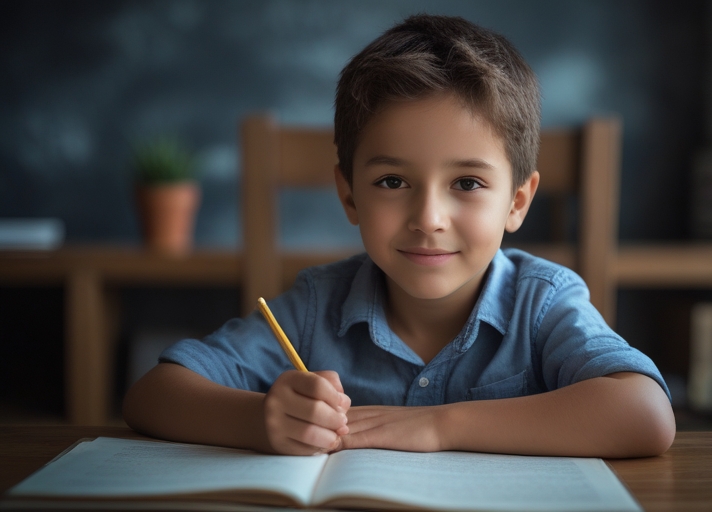
Basic ways to greet in English
Here are the most common forms children should first know. Each entry includes the translation and a short example to practice.
Everyday greetings
- Hello — Hello. Example: “Hello! How are you?” — “Hello! How are you?”
- Hi — Hi (informal). Example: “Hi, Sam!” — “Hi, Sam!”
- Hey — Hey (very informal, friendly). Example: “Hey! Look at this!” — “Hey! Look at this!”
Greetings according to time of day
- Good morning — Good morning. Example: “Good morning, teacher.” — “Good morning, teacher.”
- Good afternoon — Good afternoon. Example: “Good afternoon, Mr. Smith.” — “Good afternoon, Mr. Smith.”
- Good evening — Good evening (upon arrival). Example: “Good evening!” — “Good evening!”
Common farewells
- Goodbye — Goodbye. Example: “Goodbye, see you tomorrow.” — “Goodbye, see you tomorrow.”
- Bye — Bye (informal). Example: “Bye!” — “Bye!”
- See you — See you. Example: “See you later!” — “See you later!”
Expressions and greetings for kids: play and learn
Children learn better when play and emotion are present. Below you will see concrete activities and phrases that turn a greeting into a mini pedagogical action.
Game 1 — Greeting chain
Form a circle and each child greets with a different phrase: “Hello!”, “Good morning!”, “Hi there!”. Repeat until greetings come out fluently. The game trains memory and intonation.
Game 2 — Greet the character
Create a puppet or doll and ask each child to greet the character. Example phrases: “Hello, Teddy! How are you?”. Perfect for practicing short questions and answers.
Songs and nursery rhymes to greet
Melodies increase retention. Use short songs with greeting rhymes to develop repetition without boredom. For example: “Hello, hello, nice to see you…” and add gestures for motor memory.
Useful translated phrases: short questions and answers
Children should handle not only the greeting but small answers to keep the conversation going. Here are practical school phrases with translation:
- How are you? — How are you? / I’m fine, thank you. — “I’m fine, thank you.”
- What’s your name? — What’s your name? / My name is Ana. — “My name is Ana.”
- How old are you? — How old are you? / I’m seven years old. — “I’m seven years old.”
Personified example
Imagine Lucas, a 6-year-old boy going to an English class for the first time. The teacher says to him: “Hello, Lucas! Good morning!” — “Hello, Lucas! Good morning!” Lucas shyly answers “Hi… I’m Lucas.” — “Hi… I’m Lucas.” With daily practice, Lucas gains confidence and starts greeting his classmates: “Good morning, Maria!” — “Good morning, Maria!”
Greeting and saying goodbye in special contexts
Depending on the context (school, play, family gathering) some greetings change tone and structure. Below are variants and when to use each.
At school
Simple and short phrases like Good morning, class or Hi everyone are the most appropriate. To teach courtesy: “How are you today?” and brief answers.
At a party or gathering
Use more enthusiastic greetings: “Hey! Nice to see you!” — “Hey! Nice to see you!”. Also teach how to introduce oneself: “Nice to meet you.” — “Nice to meet you.”
On the phone or video call
Explain the difference: on a call it is common to say “Hello, this is Sara.” — “Hello, this is Sara.” and on a video call “Hi! Can you hear me?” — “Hi! Can you hear me?”
Greeting with idioms and colloquial phrases
When children already master the basics, controlled colloquial expressions can be introduced to develop naturalness.
Friendly expressions
- What’s up? — What’s up? / Example: “What’s up, Tom?” — “What’s up, Tom?”
- How’s it going? — How’s it going? / Example: “How’s it going?” — “How’s it going?”
Formal greetings that children should know
In more formal situations (visits, meetings with adults) teach phrases like “Good morning, Mr. / Mrs.” and the correct use of titles.
Phrases to practice: lists and explanations
Below are practical lists, explained and organized by purpose: greeting, response, farewell, and introduction. These phrases can be learned with flashcards, songs, and games.
Basic greetings (flashcard list)
- Hello — Hello
- Hi — Hi (informal)
- Hey — Hey (colloquial)
- Good morning — Good morning
- Good afternoon — Good afternoon
- Good evening — Good evening (upon arrival)
Responses and follow-ups
- I’m fine, thanks — I’m fine, thanks
- Nice to meet you — Nice to meet you
- See you later — See you later
How to evaluate progress in greetings
The evaluation can be informal and fun. Observe if the child:
- Responds to a greeting without asking for help.
- Uses the correct form according to the context (formal/informal).
- Practices variations and small conversations of 2 or 3 sentences.
Follow-up activities
Registering in a notebook of ‘new greetings’, small presentations in front of the class, and role-playing games are effective tools to measure confidence and fluency.
Common mistakes and how to avoid them
The most frequent mistakes help design corrective exercises. Here are the most common and simple solutions:
- Incorrect use of “Good morning/afternoon/evening”: teach the times of day with pictures.
- Pronunciation of “th” in “the”: phonetic exercises and repetition in context.
- Too long answers: teach short and natural answers to start.
Parent tip
Reinforce daily greeting at home with routines: upon entering in the morning, ask to say “Good morning”; before bedtime, practice “Good night.” Consistency builds habit.
Extra activities: challenges and projects
Proposing weekly challenges and including mini-projects maintains motivation. Some ideas:
- Greeting week: each day a different way to greet and an associated drawing.
- Mini play: a dialogue for introduction with roles and costumes.
- Phrase diary: write down new phrases with drawings and practice at home.
If you want to support the grammar part and expand the content, you can also check specific resources like passive voice for when students are ready for more complex structures.
Integrating greetings with other skills
Greetings are the basis to work on:
- Listening comprehension: recognize greetings and intonations.
- Speaking: produce short and toned sentences.
- Social skills: courtesy and turn-taking.
Suggested progression
- Teach basic greetings and short answers.
- Introduce greetings according to the time of day.
- Practice with games and songs.
- Perform mini dialogues and presentations.
Suggested materials and resources for teachers and families
To make learning sustainable, use flashcards, songs, puppets, and printed activities. Below is a practical list with examples of use:
- Visual cards: images of the sun, moon, and clock to relate to “good morning/afternoon/evening.”
- Puppets: for greeting practice in pairs.
- Playlists: short songs with greeting rhymes.
Suggestion for online classes
Use virtual backgrounds and avatars to motivate; ask children to greet the camera and respond with learned phrases. Short, repetitive, and positive.
Conclusion and final call
In summary, teaching greetings in English to children is an investment that returns confidence, interaction, and a solid foundation for language mastery. Start with simple phrases, add games, and celebrate every small progress. If you seek a structured path with progressive content and guided activities, remember that you can always try resources that complement daily practice: Start free and turn greeting into the first step towards English mastery.
Final tip: repeat, celebrate, and vary. A greeting learned with affection becomes the key to many future conversations.